Japanese Convenience Store Food: A Local's Guide to Smart Picks
Japanese Convenience Store Food: A Local's Guide to Smart Picks
Japanese Convenience Store Food: A Local's Guide to Smart Picks
That ¥3,000 ramen lunch was memorable, but the ¥160 onigiri you grabbed at 7-Eleven this morning might honestly be the better meal.
Why Konbini Culture Is Serious Business in Japan
If you come from a country where convenience stores mean stale hot dogs and sad sandwiches, you need to completely rewire your brain. Japan's three major chains — 7-Eleven (セブン), FamilyMart (ファミマ), and Lawson (ローソン) — operate on a level that would qualify as a proper restaurant in most countries. There are over 56,000 konbini across Japan, and they're not a fallback plan. They're the plan.
Japanese office workers eat konbini lunches multiple times a week without a shred of embarrassment. Entire product development teams — sometimes staffed by former restaurant chefs — spend months perfecting a single egg sandwich. Items that don't sell get rotated out ruthlessly, sometimes within weeks. What survives on those shelves has earned its place through a brutal selection process.
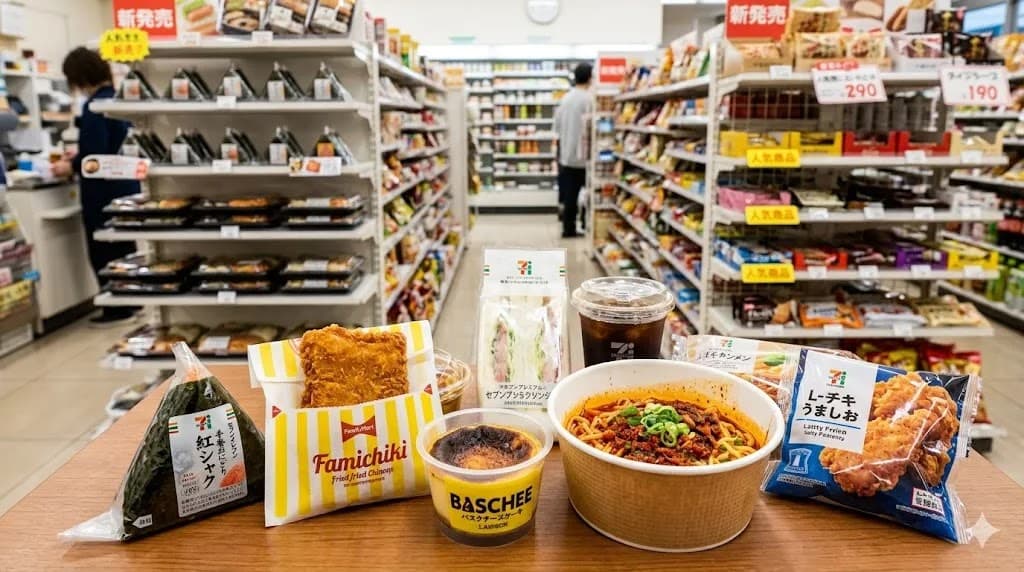
Each chain has a distinct personality. 7-Eleven generally wins on rice items and prepared foods. FamilyMart has stronger fried food (their Famichiki fried chicken is a national obsession). Lawson splits into regular Lawson and Natural Lawson — the latter targeting health-conscious shoppers with whole grain and lower-calorie options. There's also Lawson Store 100, where almost everything costs ¥100 (plus tax), which is legitimately useful for budget travelers.
The food gets delivered two to three times per day, which means the tuna mayo onigiri you grab at 7 AM was made hours ago, not days. Expiry management is strict — staff pull items before they expire, and nothing sits around getting questionable.
Pro tip: Don't overlook konbini meals as a serious budget strategy. A filling breakfast of onigiri, a boiled egg, and barley tea runs about ¥350. That's roughly $2.50, and it's genuinely good food.
The Must-Buys: What Locals Quietly Swear By
Let's start with the undisputed king: the onigiri (rice ball). Specifically, 7-Eleven's tuna mayo (ツナマヨ, around ¥140-160) has been the top-selling onigiri in Japan for over two decades. That's not a tourist recommendation — it's a statistical fact. The kombu (kelp, ¥130) and shake (salmon, ¥160) are just behind it. If you want to try something bolder, go for mentaiko (spicy cod roe, ¥170).
Next: egg sandwiches (tamago sando, たまごサンド). 7-Eleven's version (around ¥230) is absurdly creamy. The bread is soft in a way that will ruin you for other countries' bread forever. FamilyMart recently reformulated theirs and it's gained ground, but 7-Eleven still edges ahead.
Famichiki (ファミチキ, ¥220) from FamilyMart is the fried chicken to try. It's at the hot food counter near the register — just point or say "Famichiki hitotsu" (one Famichiki, please). 7-Eleven counters with their ななチキ (Nanachiki), and Lawson has Karaagekun (からあげクン, ¥250), which comes in flavors that rotate seasonally. All are excellent.
The chilled noodle section is underrated by visitors. In summer, grab a cold soba or hiyashi chūka set (¥400-500) — they come with tare sauce and sometimes a separate packet of mustard. In winter, the oden counter at Lawson and 7-Eleven is a secret weapon: pick individual items like daikon (radish, ¥90), chikuwa (fish cake, ¥100), or a tamago (egg, ¥100) ladled from a steaming pot.
For dessert, Lawson's Basque cheesecake (バスチー, around ¥260) is legitimately one of the best desserts you'll eat in Japan at any price point. 7-Eleven's Italian Pudding (¥290) is thick, rich, and cult-followed.
Local secret: Grab a Saladasai (サラダチキン) — the plain chicken breast packs that cost about ¥230. Japanese gym-goers and dieters live on these. They're protein-dense, portable, and surprisingly well-seasoned.
Seasonal and Regional Limited Items Worth Hunting
This is where konbini shopping transforms from routine into a genuine treasure hunt. Japanese convenience stores run limited-edition items constantly — sometimes lasting only two to three weeks — and locals absolutely pay attention. Twitter (now X) accounts with hundreds of thousands of followers exist solely to track new konbini releases.
Seasonal cycles matter. In spring (March-April), expect sakura-flavored everything: sakura mochi, sakura latte, sakura Kit-Kats. Some are gimmicky, but FamilyMart's sakura mochi frappe and 7-Eleven's sakura roll cake (around ¥280) are genuinely good. In autumn, satsumaimo (sweet potato) and kuri (chestnut) items dominate — Lawson's sweet potato flavored Basque cheesecake is worth planning a trip around. Winter brings strawberry season, and the strawberry sandwiches (いちごサンド, ¥300-400) across all three chains hit a level of quality that's almost absurd for a convenience store.
Regional exclusives are the deeper game. Hokkaido 7-Elevens carry onigiri with local salmon varieties and rich dairy-based desserts you won't find in Tokyo. Okinawa FamilyMarts stock spam musubi and items flavored with shikuwasa (a local citrus). Osaka Lawsons occasionally feature takoyaki-flavored snacks that never make it east. When you change regions, check the shelves — the lineup genuinely shifts.
The collaboration items are wild too. Konbini chains partner with famous restaurants and brands for exclusive products. 7-Eleven has done ramen collaborations with Michelin-starred shops like Tsuta, selling cup noodle versions for ¥300-400 that are shockingly close to the original.
Pro tip: Check the Japanese convenience store hashtags on X or Instagram — search #コンビニ新商品 (konbini new products) — even if you can't read Japanese, the photos tell you exactly what's new and which stores carry it. Locals are obsessively thorough about this.
What to Skip: Overhyped Items That Disappoint Locals Too
Let's be honest about what doesn't live up to the hype, because not every konbini item deserves your stomach space or your yen.
Most konbini bento boxes (the full meal trays, ¥500-700) are fine but rarely exciting. The fried chicken bento, the hamburg steak bento — they're decent office lunches, but they've been sitting longer than onigiri, and the rice can get dry. If you want a hot prepared meal, you're almost always better off assembling your own combination: one onigiri, one hot item from the counter, a side salad (¥200), maybe a cup of miso soup (¥100). More variety, often cheaper, and fresher.
Pre-made pasta is a consistent letdown. The Napolitan and meat sauce options (¥400-500) taste like what they are — mass-produced pasta that's been refrigerated. Japan does incredible things with rice and noodles in convenience stores, but Italian food isn't their strong suit. Skip it.
Flavored waters and "functional" drinks marketed with health claims are mostly overpriced sugar or artificial sweetener delivery systems at ¥160-180 per bottle. Just buy regular mugicha (barley tea, ¥100-110) or unsweetened green tea. Your body will thank you, and so will your wallet.
The hot steamed buns (nikuman/肉まん) at the register look appealing behind that glass, but quality varies wildly by time of day. If they've been sitting in the steamer for hours, the skin gets rubbery and the filling dries out. Early morning or late evening — when they're freshly stocked — is a completely different experience from a 3 PM purchase.
Finally, skip the expensive "premium" sandwiches (¥400+) unless they're a specific limited-edition collaboration. The regular ¥230 egg sandwich outperforms most of them. The premium label often just means slightly more filling for significantly more cost.
Local secret: Japanese people rarely buy konbini coffee for the coffee itself — they buy it because it's ¥110 for a machine-brewed cup that's genuinely solid, making those ¥500+ canned "premium" coffee drinks near the registers a baffling tourist trap.
Pro Moves: Timing, Loyalty Points, and Unwritten Konbini Etiquette
Timing is everything. Fresh deliveries typically arrive early morning (around 5-7 AM), midday (11 AM-1 PM), and evening (5-7 PM). Hit the store within an hour of a delivery and the onigiri selection is fully stocked, the sandwiches are at peak freshness, and popular items haven't been picked over. Late night (after 10 PM) is when stores start marking down items approaching expiry with small discount stickers — ¥30-50 off isn't uncommon. Budget travelers who time their visits to these markdown windows can eat remarkably well for very little.
Loyalty apps are free money. Download the 7-Eleven app (7NOW or セブンアプリ), FamilyMart's ファミペイ (FamiPay), or Lawson's Pontaカード app before your trip. Points accumulate fast when you're eating konbini meals daily, and they regularly offer coupons for free items — a free coffee, a free onigiri. FamiPay occasionally runs campaigns where you get ¥100-200 in points just for buying specific items. It takes five minutes to set up and pays for itself within days.
Now, etiquette. These are the unwritten rules that nobody will tell you but everyone notices:
- Don't eat inside the store. Some konbini have a small eat-in area with tables — use that, or eat outside. Standing in the aisles eating is a hard no.
- Say nothing or say "kekkou desu" (結構です, "I'm fine") when asked if you want your items heated, a bag, or chopsticks — if you don't want them. The cashier's rapid-fire questions can feel overwhelming. A simple head shake also works.
- Separate your trash. Most konbini have bins outside sorted into bottles/cans, burnable, and plastic. Use them correctly. Locals are watching, even when it seems like they're not.
- Don't linger at the ATM. 7-Eleven ATMs accept foreign cards and are a lifesaver, but hovering there while people queue behind you is stressful for everyone. Have your PIN ready.
- The microwave is a service, not an obligation. When staff ask "Atatame masuka?" (温めますか? — "Shall I heat this?"), they'll microwave your bento or nikuman for free. Say "onegaishimasu" (please) if yes.
Pro tip: Paying with a Suica or Pasmo transit card at the register is the fastest checkout method, and it avoids the awkwardness of fumbling with coins. Just tap and go — exactly what the salaryman behind you is silently praying you'll do.
Related Articles

Japan's Convenience Stores Are Actually Incredible — A Local's Guide
7-Eleven, FamilyMart, Lawson — these aren't just places to grab snacks. They're where locals eat, bank, pay bills, and survive daily life.

The Food of Obon: What Japanese Families Actually Eat During the Ancestor Festival
Look, I'll be honest with you. When I first moved to Japan, I had no idea what Obon actually meant beyond "some August h…
Japan's Autumn Food Season: What Locals Eat When Koyo Arrives
You know autumn has arrived in Japan not just by the changing leaves, but by the sudden appearance of chestnuts and swee…
Osechi Ryori: The New Year Food Japanese Families Actually Argue About
You know that feeling when your relatives come over for the holidays and someone inevitably brings up that dish that spl…